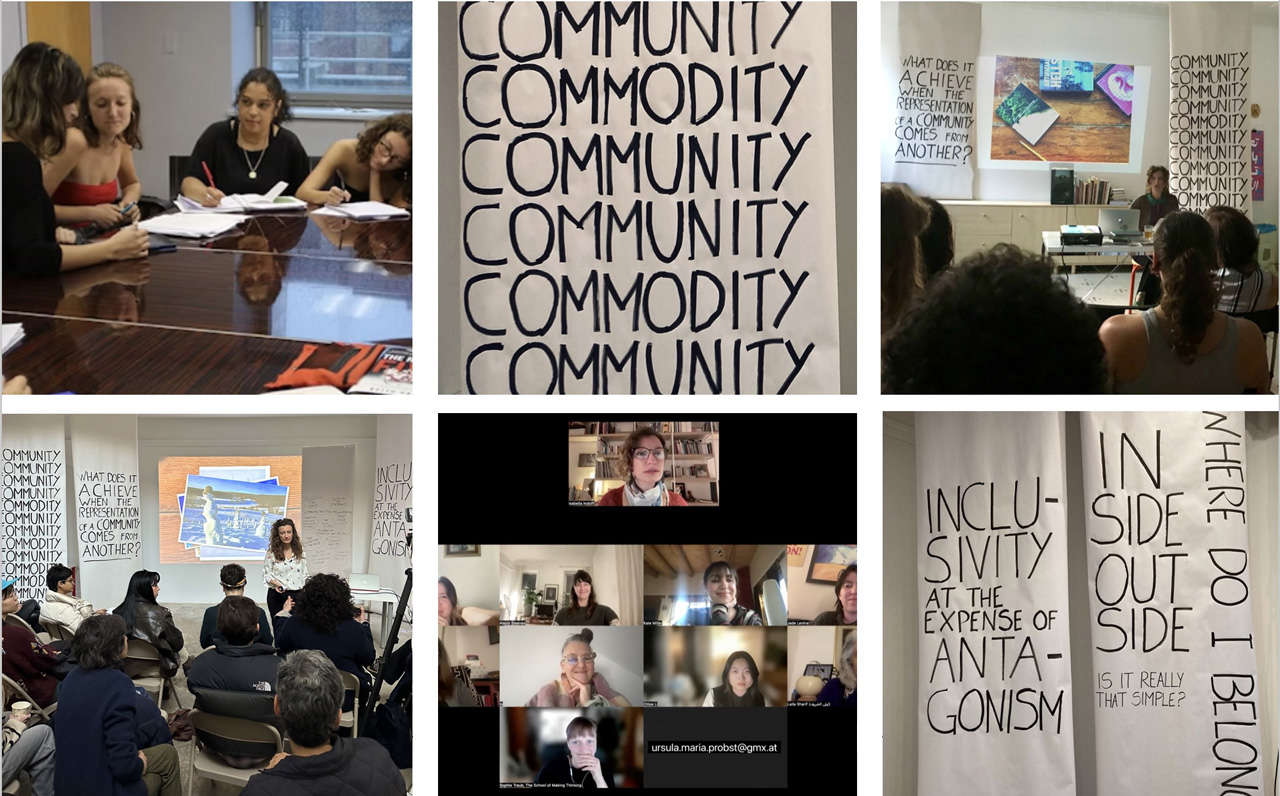
Leave the Community Alone is a research project centered around the politics and the ethics of “community art”. By way of a journey through Italy, Russia, Iceland and the United States, the research presents four case studies of art residencies and festivals, each activating a critical exchange between local communities and artists, triggering problematic power dynamics of representation.
Drawing on scholars like Hal Foster, Claire Bishop, Grant Kester and Miwon Kwon, this research questions the positionality of curators and artists in relation to the communities they work for and with. What does it achieve when the representation of a community comes from another? How do curators and artists, in the role of outsiders, activate dialog with the residents? How do they manage conflicts and antagonism?
Answers are sought from the curators themselves, whose words often reveal their inability to understand the communities they claim to work with and for. Despite their stated intentions to democratize art, they often reinforce a hierarchical and centralized approach to art-making. Leave The Community Alone aims to unveil the rhetoric of community in contemporary art, and to challenge romantic notions of community, while encouraging critical thinking and emphasizing the complexity of communities as contested cultural spaces.
The research is presented publicly as a 40-minute lecture, supported by a cinematic slide show incorporating anecdotes, images, and voices from the field. The primary audience for the talk includes curators, scholars, and artists, who are invited to a convivial moment at the end of the talk, fostering further discussion and reflection on the research findings.
Over the years, Leave the Community Alone has evolved through multiple formats: it has been presented as a lecture at › Bard College in (NY), and › Manchester Metropolitan University of Art (UK), as a seminar at the › School of Making Thinking (NY), and as a workshop at › Storm Bookstore and at › Residency Unlimited in Brooklyn (NY).
CASE-STUDIES
› Seminaria Sogninterra (Italy)
› Nikola-Lenivets (Russia)
› List í Ljósi (Iceland)
› Wassaic Project (New York, USA)
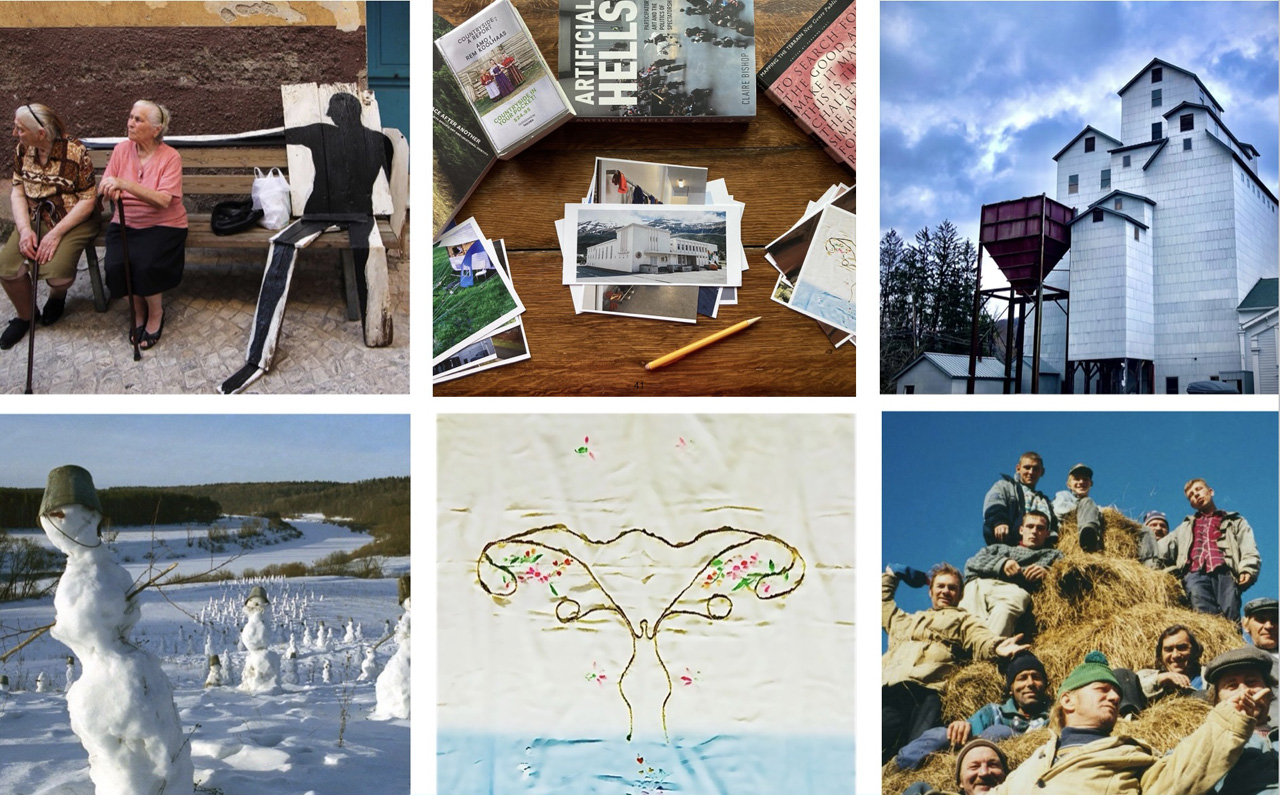
Seminaria is a no-profit and community-based art project founded in 2011 in a small medieval town in the south of Italy, a region which is suffering from a wave of depopulation. In collaboration with some of the 1.000 residents, Seminaria realizes a Biennial Festival of Environmental Art that promotes the whole village as a laboratory for site-specific and community-oriented practices. International artists participate in the Seminaria residency program and develop new specific projects for and with the community. In 2016 Seminaria Festival was awarded as one of the 10 most interesting art projects of the Italian Region Lazio. Throughout the years, Seminaria has been supported by two relevant international partnerships: Fondazione Romaeuropa, the most important Italian festival for art, theatre, dancing and contemporary music; and Cyfest, one of the largest nomad media art festivals in the world.
Nikola-Lenivets is the largest land art park in Europe, developed around a tiny village, a former kolchoz, (140 miles southwest of Moscow), located on the territory of the Ugra National Park, a UNESCO designated biosphere. Over 650 hectares of land is scattered a big collection of permanent works of modern art and architecture. International artists and architects have designed and realized projects by using local materials with the collaboration of the residents, engaged in the development of a new economy empowered by the land art park. The founder of the project is the artist Nikolay Polissky, who arrived in Nikola-Lenivets in 1989 and started the project in 2000. When the URSS collapsed, there were just a handful of surviving full-time residents, without a job and depressed. Polissky engaged them in making snowmen in a field. He paid them and he successfully exhibited the photograph in a gallery. That was not only an experiment in post-Soviet labor management, but it was the start of the Nikola-Lenivets art project. ‘Mr. Polissky and villagers-turned-artisans under his training have crafted installations for the Russian Pavilion at the Venice Biennale and for the museum of modern art in Luxembourg. Nikola-Lenivets is a place for creative experiments and innovative solutions - from art to eco-farming. The park hosts the Arkhstoyanie Land Art Festival and New Media Night that now attracts thousands each year.
List í Ljósi is a yearly award-winning arts festival that celebrates the return of the sun to a remote, East Iceland fjord. During the final two days of darkness, the town of Seyðisfjörður turns off all of its lights and welcomes a selection of international and national artists to illuminate the wild landscape with contemporary artworks, on a thrilling scale. Alongside the unique outdoor exhibition, this renowned, free festival attracts visitors and participants from across the globe to experience a week-long program of international film screenings, performances, talks, panels and events to both generate and gather a creative community.
Wassaic Project (two hours north of New York City, USA) is a 501(c)(3) non-profit organization that uses art and arts education to foster positive social change and to nurture connections between our artists and our neighbors. Founded in 2008 by a group of artists in a half dead village, the Wassaic Project envisions a community in the Hamlet of Wassaic and its surrounding region that is socially inclusive, generous, cooperative, and economically vibrant. The Wassaic Project is home to a year-round artist residency program, art exhibitions, festivals, and art education programs for kids, teens, and adults, contributing to the community revitalization through the arts and the spirit of generosity. In their mission they claim: ‘Above all else, we honor and respect our community.’ Their project is regenerating a lively community and is bringing thousands of people to the town, ‘but the goal has always been to revitalize the town, not reshape it.’
LEAVE THE COMMUNITY ALONE / Critical perspectives on community art
Research project / 2023 › 2025